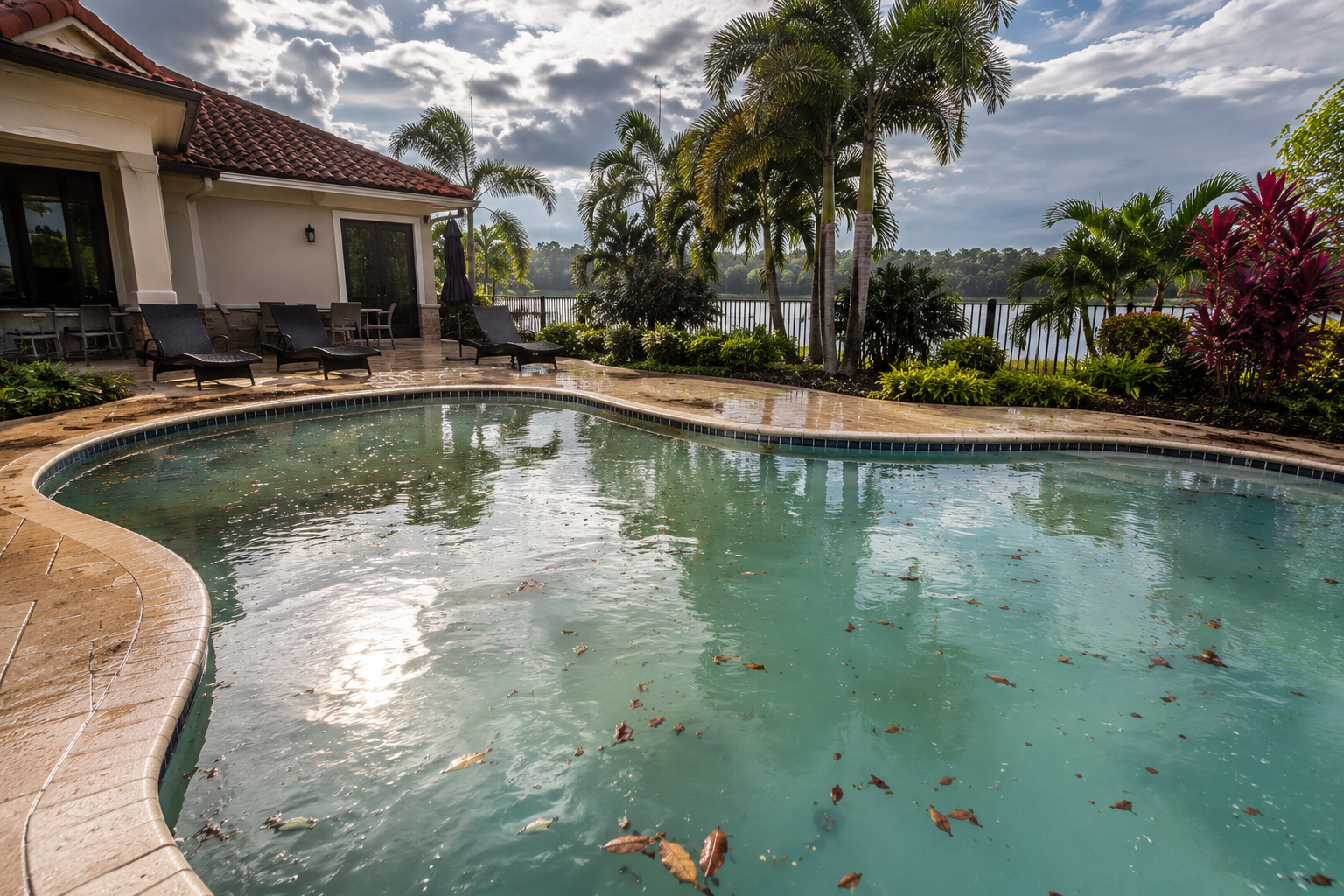
Pool cloudy after shock is one of the most frustrating things to deal with as a pool owner. You add shock expecting clear, sparkling water, and instead you are left staring at a hazy or milky pool.
The good news is that this usually means the treatment is working. The not so great news is that there are a few steps you still need to take to actually get your pool back to clear.
If your pool cloudy after shock situation has you second guessing everything, here is exactly what is going on and how to fix it.
Why Your Pool Is Cloudy After Shocking
When you shock your pool, you are adding a high dose of chlorine to break down contaminants like bacteria, oils, and early stages of algae.
As that process happens, those contaminants turn into tiny particles that stay suspended in the water. This is the main reason your pool cloudy after shock becomes noticeable.
Instead of large debris you can see and remove, you now have microscopic particles floating throughout the pool. Until your filtration system removes them, the water will stay cloudy.
The Most Common Causes of Cloudy Water
Your Filter Is Not Keeping Up
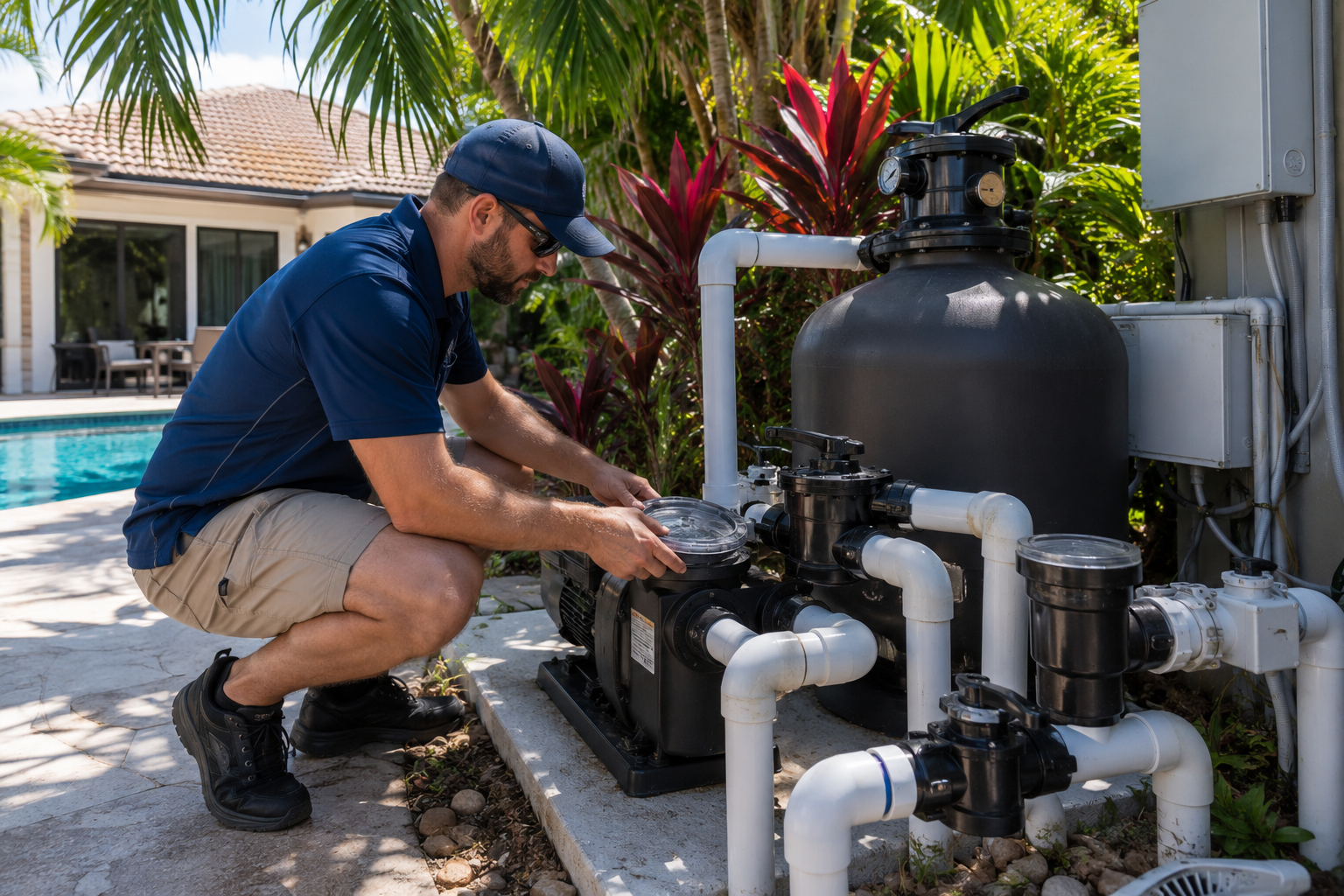
Your filtration system is responsible for clearing out everything the shock breaks down. If your filter is dirty, clogged, or not running long enough, the water will not clear properly.
Your Water Chemistry Is Off
Even after shocking, your pool still needs balanced chemistry. High pH or improper alkalinity can prevent your water from clearing, even if chlorine levels are correct.
There Was Already Algae Starting
If your pool was beginning to turn, shocking will kill the algae but not remove it. That dead algae is one of the biggest reasons a pool cloudy after shock issue sticks around.
If you are noticing green tones or recurring issues, check out this guide:
https://alohapoolpros.com/pool-turning-green-even-with-chlorine/
Not Enough Circulation
Running your pump for only a few hours is not enough after shocking. Your system needs continuous circulation to filter out all the particles created during the process.
How to Fix Pool Cloudy After Shock
If your pool cloudy after shock is not clearing up, follow these steps:
- Run your pump continuously for at least 24 to 48 hours
- Clean or backwash your filter before and during the process
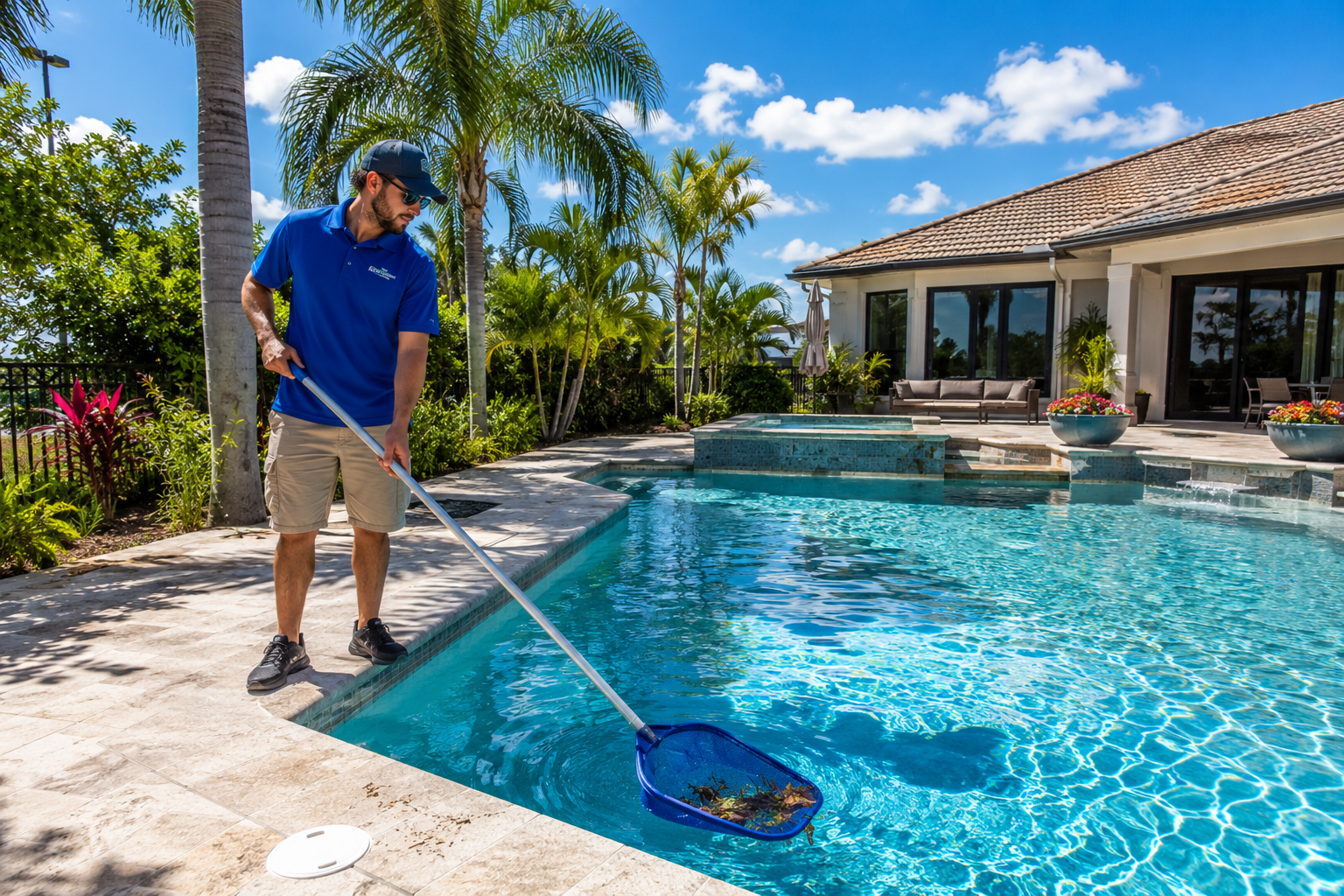
- Brush the pool walls and floor to loosen any buildup
- Vacuum out debris sitting at the bottom
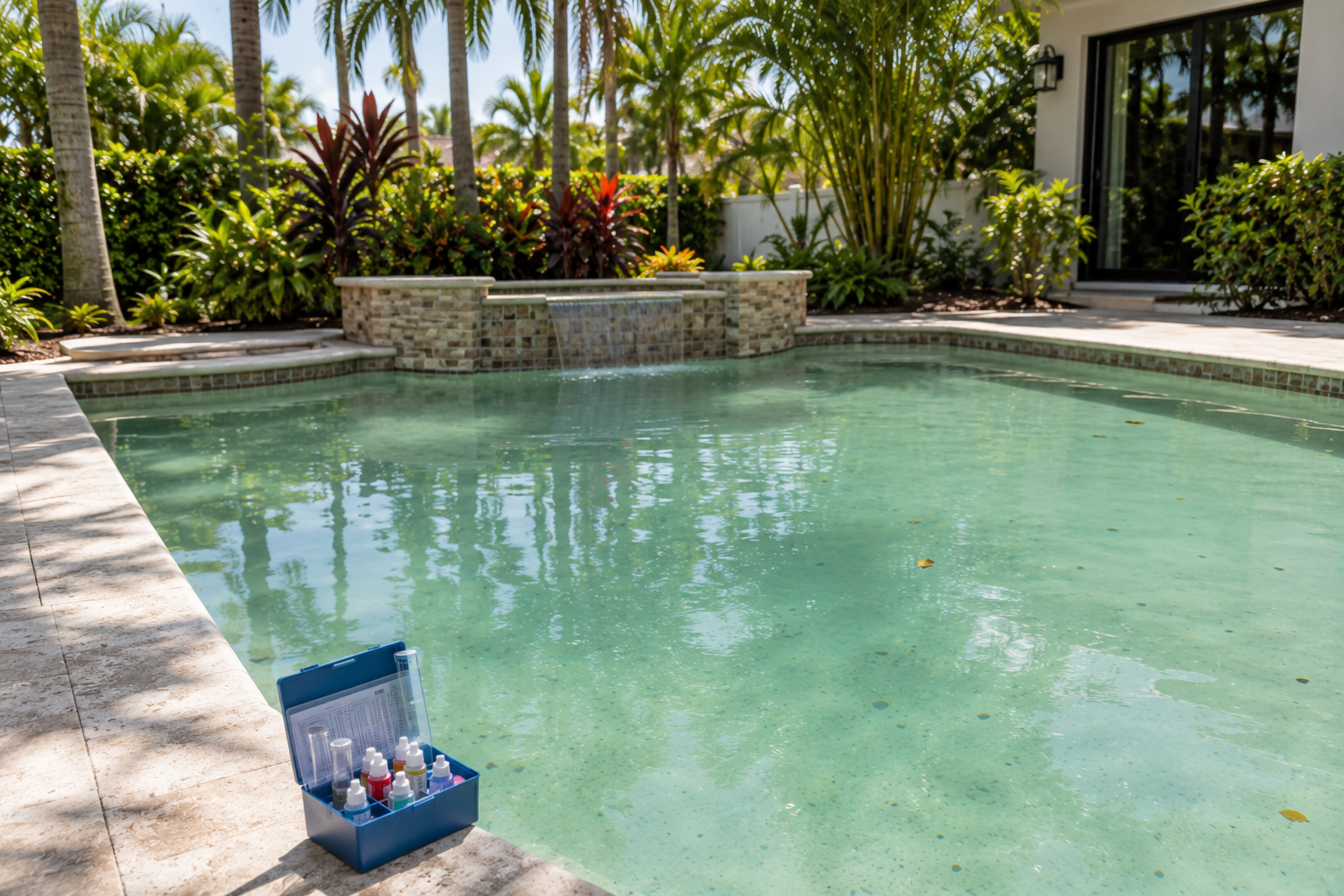
- Test and rebalance your water chemistry
In some cases, adding a clarifier can help your filter grab smaller particles more effectively.
Consistency is what makes the difference here. Most cloudy pools clear up quickly once everything is circulating and balanced properly.
How to Prevent Cloudy Water Going Forward
The easiest way to avoid dealing with a pool cloudy after shock situation is to stay ahead of your maintenance.
Regular cleanings, balanced chemicals, and proper filtration keep your pool from reaching the point where heavy shocking is needed in the first place.
If you want a better idea of what consistent service includes, you can read more here:
https://alohapoolpros.com/what-does-weekly-pool-service-include/
And if you are local to Brevard County, you can explore full service options here:
https://alohapoolpros.com/weekly-pool-services-viera-suntree-brevard/
When It Is Time to Call for Help
If your pool cloudy after shock is lasting more than a couple of days, it is usually a sign that something deeper is off. That could be filtration issues, chemical imbalance, or buildup that needs professional treatment.
Instead of guessing and re shocking over and over, having a consistent maintenance plan can save you time, money, and frustration.
You can always start here to learn more:
https://alohapoolpros.com/
Final Thoughts
Dealing with a pool cloudy after shock situation can feel like you made things worse instead of better, but that is rarely the case. Most of the time, your pool is simply in the middle of the cleaning process.
With the right filtration, balanced chemistry, and a little patience, your water will return to clear. And if you want to avoid the cycle altogether, consistent pool maintenance is the key.