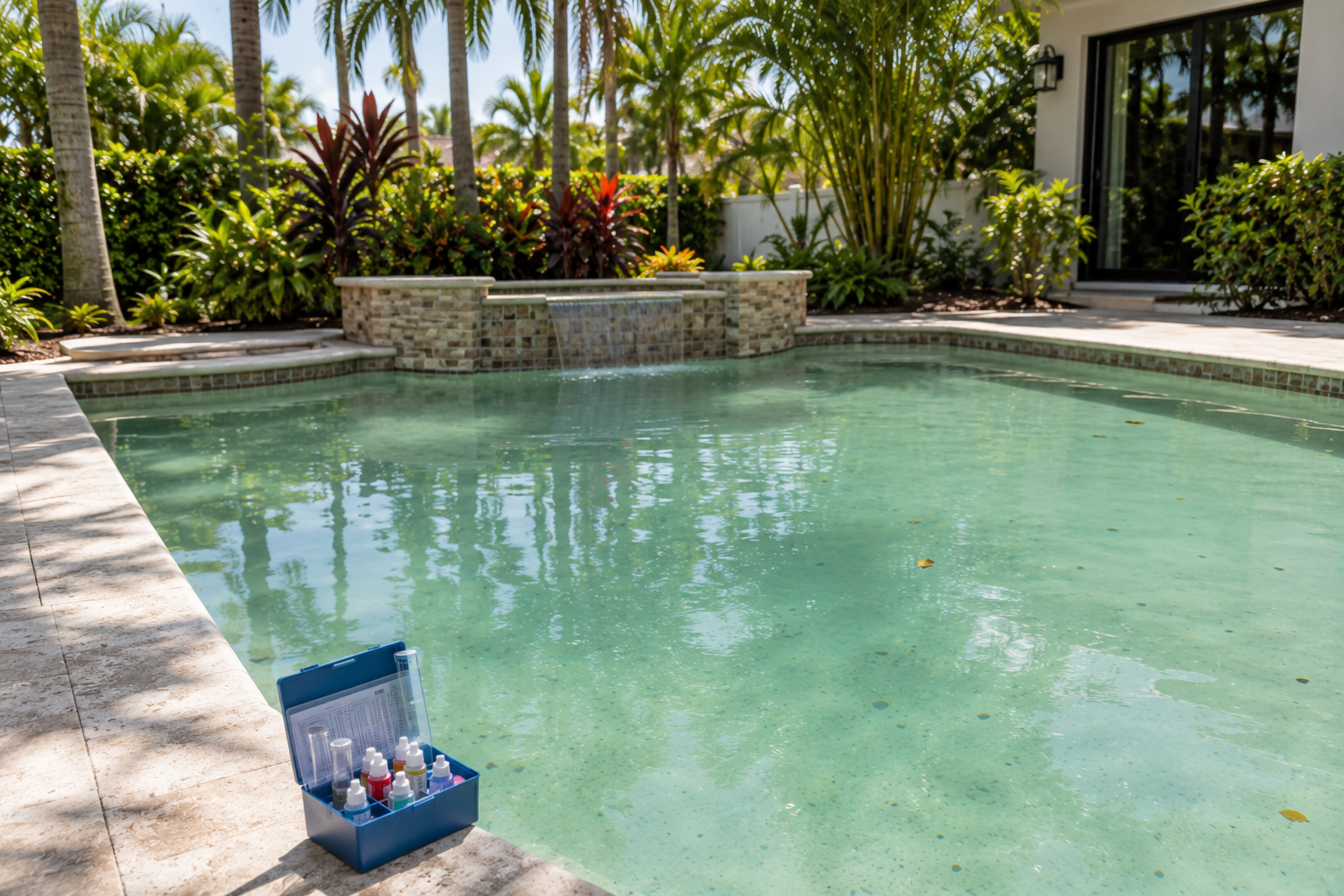
swimming in unbalanced pool water can pose serious health risks for both children and adults. While many homeowners focus primarily on keeping their pool looking clean, water that appears crystal clear can still contain chemical imbalances, bacteria, or contaminants that make swimming unsafe.
Florida’s year-round swimming season means pools require constant attention to maintain proper chemical balance. Heat, rainstorms, heavy pool usage, and environmental contaminants can quickly affect water chemistry. When these issues go unnoticed, swimming in unbalanced pool conditions can lead to skin irritation, eye problems, respiratory issues, and even illness.
Understanding the risks associated with swimming in unbalanced pool water can help homeowners protect their families and maintain a safe swimming environment.
At Aloha Pool Pros, we help homeowners throughout Melbourne, Viera, Suntree, Rockledge, Cocoa, and surrounding Brevard County communities maintain safe, balanced pools year-round through professional weekly maintenance.
Learn more about our weekly pool services here:
https://alohapoolpros.com/weekly-pool-services-viera-suntree-brevard/
What Does an Unbalanced Pool Mean?
Before discussing the health risks, it is important to understand what causes an unbalanced pool.
A swimming pool becomes unbalanced when one or more aspects of water chemistry fall outside recommended ranges.
Common water chemistry issues include:
• Low or high chlorine levels
• Improper pH balance
• Low or high alkalinity
• Improper stabilizer levels
• High calcium hardness
• Poor water circulation
When these factors are not properly maintained, swimming in unbalanced pool water becomes more likely to cause discomfort or health problems.
According to the Centers for Disease Control and Prevention, proper pool chemistry is essential for preventing recreational water illnesses and ensuring swimmer safety.
Learn more about healthy swimming recommendations here: https://www.cdc.gov/healthywater/swimming/
1. Skin Irritation and Rashes
One of the most common problems associated with swimming in unbalanced pool water is skin irritation.
Improper pH levels, excessive chlorine, or bacteria growth can all irritate sensitive skin.
Common symptoms include:
• Redness
• Itching
• Dry skin
• Rashes
• Burning sensations
Children and individuals with sensitive skin are often affected first.
Many homeowners assume chlorine itself causes irritation, but water that lacks proper balance is usually the primary issue.
Maintaining balanced water chemistry helps prevent uncomfortable skin reactions while improving the overall swimming experience.
2. Eye Irritation and Burning
Eye irritation is another common complaint related to swimming in unbalanced pool conditions.
Many swimmers incorrectly assume burning eyes mean there is too much chlorine in the water. In reality, burning eyes often occur when pool chemistry is poorly balanced.
Symptoms may include:
• Red eyes
• Burning sensations
• Blurred vision
• Excessive tearing
• Eye dryness
Improper pH levels can significantly increase eye discomfort.
If swimmers consistently experience burning eyes, the pool water should be tested and adjusted promptly.
You may also find our article helpful: Pool Water Burns Eyes? Here’s What’s Really Causing It
3. Respiratory Problems
Another concern associated with swimming in unbalanced pool water is respiratory irritation.
When chlorine combines with contaminants such as sweat, sunscreen, body oils, and organic material, chloramines can form.
Chloramines may cause:
• Coughing
• Wheezing
• Throat irritation
• Nasal irritation
• Difficulty breathing
These symptoms can be especially problematic for individuals with asthma or other respiratory conditions.
Strong “chlorine smells” around pools are often a warning sign that water chemistry requires attention.
Regular maintenance and proper sanitizer levels help reduce chloramine formation.
4. Increased Risk of Bacteria Growth
One of the most serious risks of swimming in unbalanced pool water is exposure to harmful bacteria.
When chlorine levels become too low, bacteria, viruses, and other microorganisms can multiply rapidly.
Potential illnesses include:
• Gastrointestinal illness
• Ear infections
• Skin infections
• Eye infections
• Respiratory infections
According to the CDC, proper sanitizer levels are critical for preventing recreational water illnesses.
Florida’s warm climate creates ideal conditions for bacteria growth, making consistent pool maintenance even more important.
5. Algae Growth Can Make Pools Unsafe
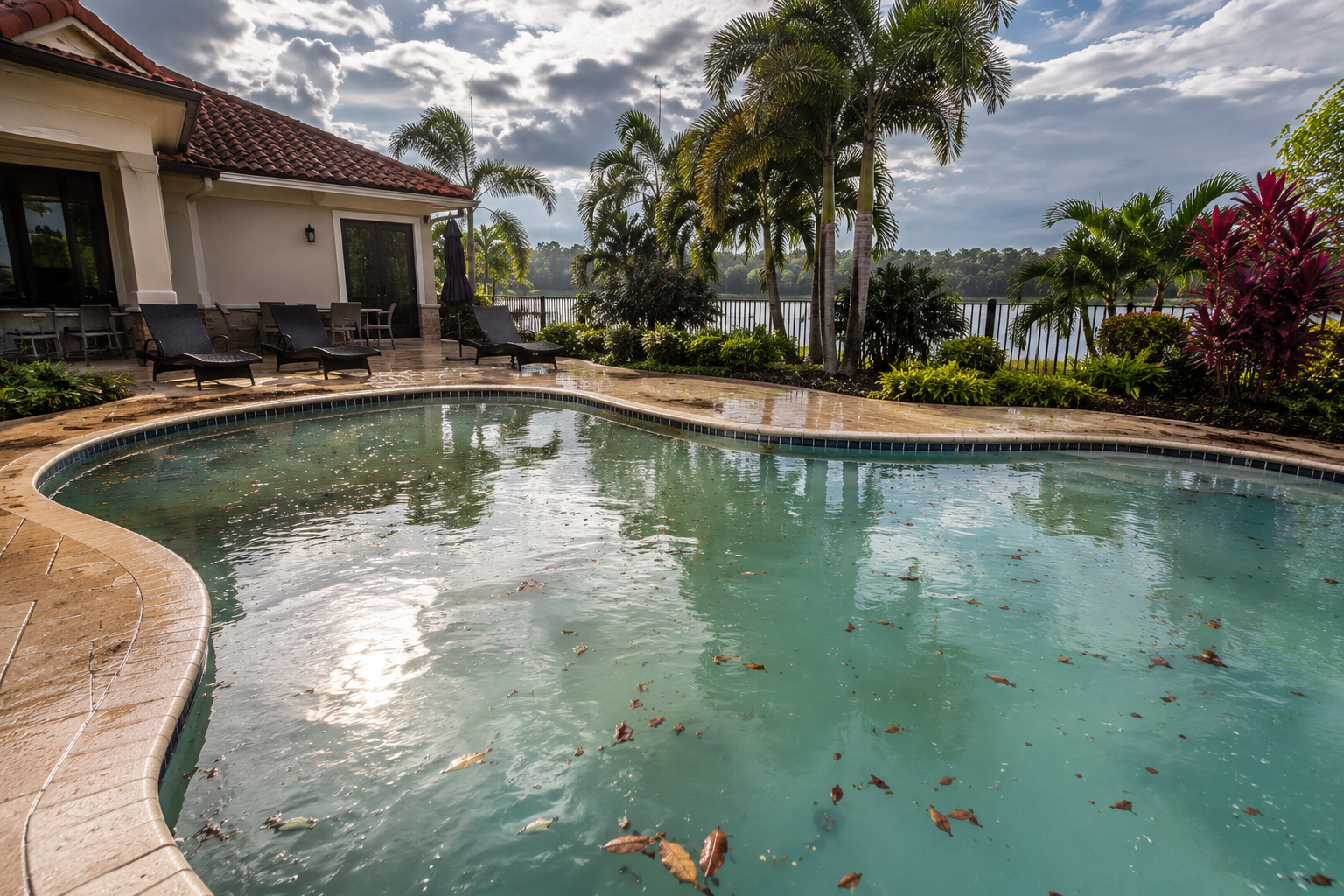
Poor water chemistry often leads to algae growth.
Although algae itself may not always cause illness, algae outbreaks create conditions that encourage bacteria growth and make pool surfaces slippery.
Common signs include:
• Green water
• Slippery walls
• Cloudy water
• Strong odors
• Surface discoloration
Homeowners throughout Melbourne, Viera, and Suntree frequently experience algae issues during Florida’s hot summer months when rain and heat affect sanitizer levels.
You may also enjoy reading: How to Prevent Algae in a Pool
Professional weekly maintenance helps prevent algae outbreaks before they become severe.
6. Chemical Imbalances Can Damage Pool Equipment
While the health risks are important, swimming in unbalanced pool conditions can also damage expensive pool equipment.
Improper water chemistry may contribute to:
• Corrosion
• Scale buildup
• Equipment failure
• Surface staining
• Reduced equipment lifespan
Consistent chemical monitoring protects both swimmers and your investment.
Homeowners often discover that routine professional maintenance costs significantly less than major equipment repairs.
7. Children and Pets Face Greater Risks
Children and pets are often more vulnerable when swimming in unbalanced pool water.
Young children tend to swallow more water while swimming, increasing their risk of exposure to contaminants.
Additionally:
• Children’s skin is often more sensitive.
• Pets may drink pool water.
• Smaller body size can increase sensitivity to chemicals.
Families with young children should monitor pool chemistry closely and avoid swimming whenever water quality appears questionable.
Warning Signs Your Pool May Be Unbalanced
Many homeowners wonder how to determine if their pool chemistry is out of balance.
Common warning signs include:
• Strong chlorine odor
• Cloudy water
• Burning eyes
• Skin irritation after swimming
• Algae growth
• Foamy water
• Scaling on tile surfaces
If any of these symptoms occur, swimming should be postponed until water chemistry is tested and corrected.
How Florida Weather Affects Pool Chemistry
Florida weather constantly impacts pool chemistry.
Heavy rainstorms, high temperatures, humidity, and intense sunlight can all change water balance quickly.
Pools throughout Brevard County often experience:
• Rapid chlorine loss
• Increased algae growth
• Diluted sanitizer levels
• Greater chemical demand
This is why many homeowners throughout Melbourne, Rockledge, Viera, Cocoa, and Satellite Beach choose professional weekly pool maintenance.
Regular service helps ensure water remains safe despite Florida’s challenging climate.
Why Professional Weekly Pool Service Matters
Routine maintenance is one of the best ways to prevent problems associated with swimming in unbalanced pool water.
Professional weekly pool service typically includes:
• Water testing and balancing
• Chlorine adjustment
• pH monitoring
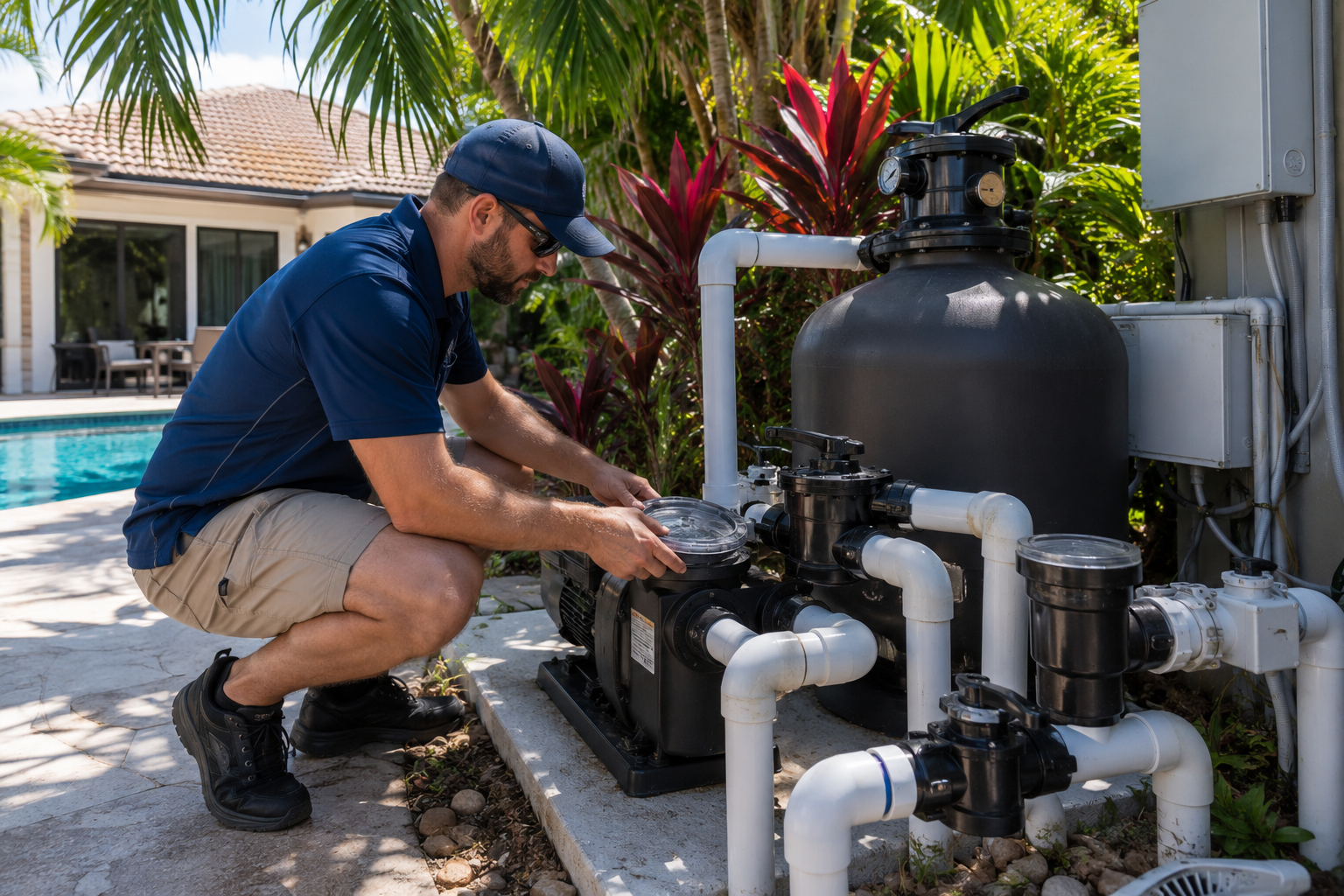
• Equipment inspection
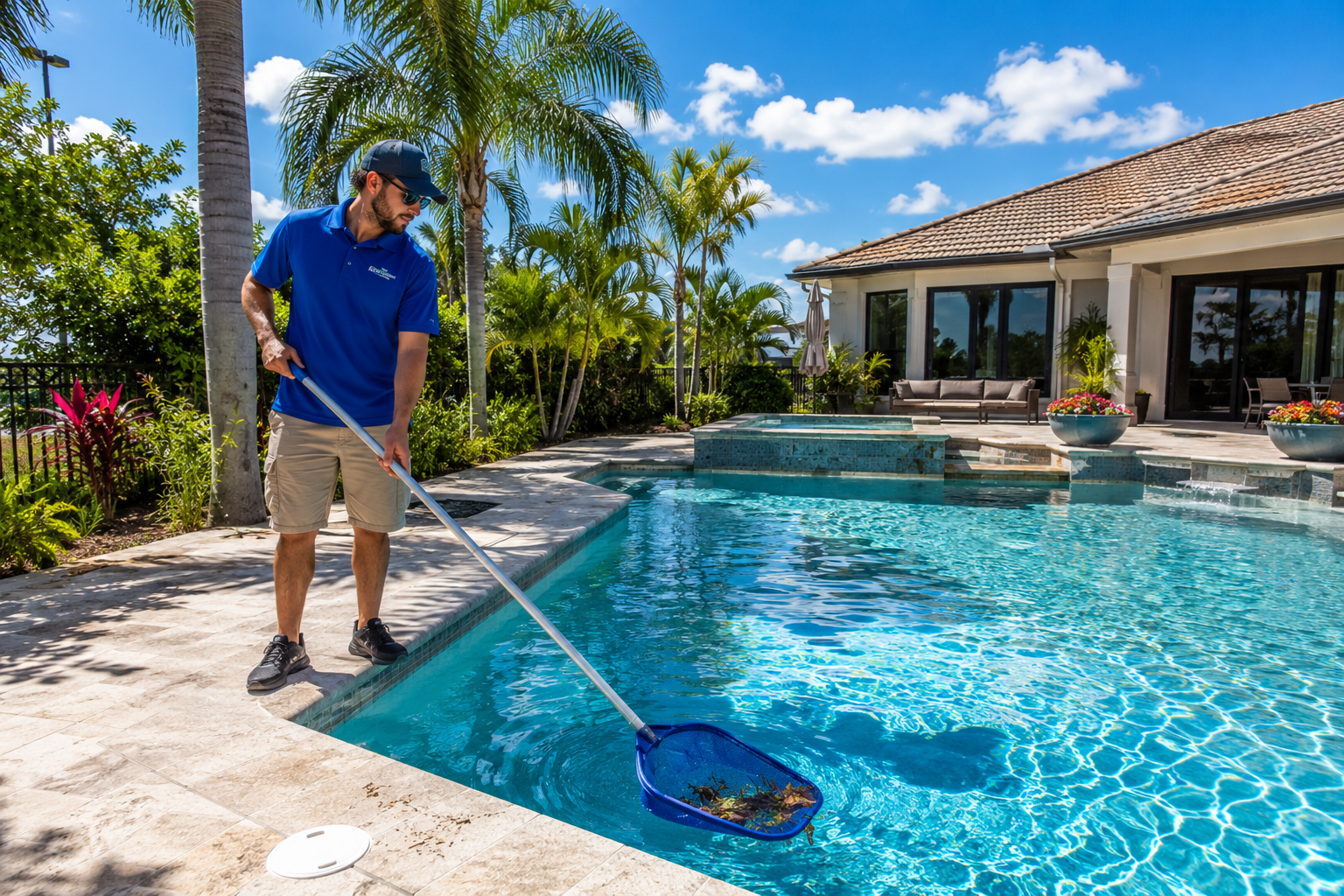
• Debris removal
• Filter checks
At Aloha Pool Pros, our technicians monitor water chemistry during every visit to help homeowners maintain clean, safe pools year-round.
Learn more about our weekly pool services here:
https://alohapoolpros.com/weekly-pool-services-viera-suntree-brevard/
How Often Should Pool Water Be Tested?
The CDC recommends testing pool water frequently to ensure sanitizer and pH levels remain within safe ranges.
Homeowners should generally:
• Test chlorine several times each week.
• Test pH at least twice per week.
• Inspect equipment regularly.
• Monitor water after heavy rainstorms.
Professional maintenance helps ensure these tasks are completed consistently.
You may also find this article helpful: How Often Should a Pool Be Cleaned in Florida?
Protect Your Family With Professional Pool Maintenance
While swimming in unbalanced pool water may seem harmless, prolonged exposure to improper water chemistry can create significant health and safety concerns.
Routine maintenance helps protect swimmers, prevent algae outbreaks, and maintain safe water conditions year-round.
Aloha Pool Pros proudly provides professional weekly pool cleaning services throughout Melbourne, Viera, Suntree, Rockledge, Cocoa, and surrounding Brevard County communities.
Learn more or request service here:
https://alohapoolpros.com/weekly-pool-services-viera-suntree-brevard/